
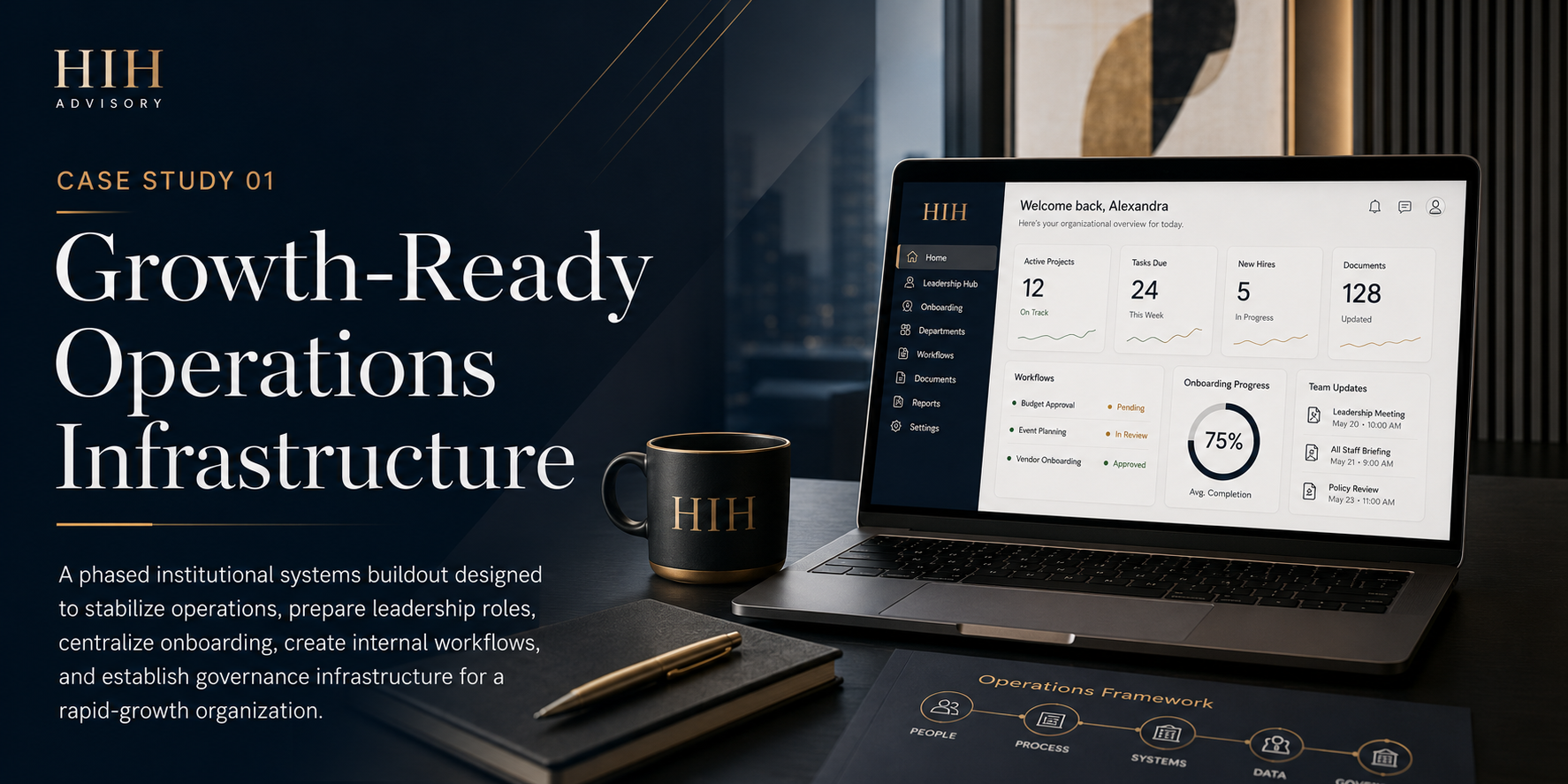
Anonymized Strategic Case Study
This case study is presented in anonymized form to protect client confidentiality and proprietary implementation details. The structure reflects a real strategic infrastructure proposal developed for a rapid-growth, mission-driven institution with expanding leadership, staffing, governance, onboarding, and internal operations needs.
Growth Had Outpaced Internal Infrastructure
The organization was preparing for its next stage of growth while facing internal infrastructure gaps across leadership readiness, onboarding, documentation, workflows, controls, shared resources, and institutional knowledge capture.
Growth Pressure
Operational demand had outpaced informal systems and required a more structured internal operating model.
Leadership Readiness
Open leadership roles needed clearer responsibilities, reporting lines, success measures, and first-90-day expectations.
Knowledge Capture
Institutional knowledge appeared to live with individuals instead of centralized systems and repeatable documentation.
Integrated Buildout
The organization needed governance, technology, workflows, accountability, and training built together — not as isolated tools.
Informal Operations Were No Longer Enough
Rapid growth, leadership transitions, limited SOPs, decentralized information, and unclear operating expectations created a need for documented systems and a shared execution environment.
Infrastructure Gaps
- Multiple leadership vacancies
- No centralized onboarding structure
- Limited documented SOPs or controls
- Knowledge loss during staff transitions
- Heavy reliance on senior leadership for daily operational clarity
Hiring Into Undefined Systems
- New hires may lack direction and structure
- Work may be duplicated, delayed, or lost
- Financial and control gaps may continue
- Accountability may remain unclear
- Executive leadership may remain the default decision-maker
Stabilize First. Build in Phases. Support Adoption.
The recommended roadmap organized the buildout into phased infrastructure layers: discovery, leadership readiness, onboarding, internal operations, controls, growth modules, and ongoing support.
Foundation Sprint
Discovery, gap identification, priority mapping, technology recommendations, and implementation planning.
Leadership Readiness
Role clarity, job descriptions, scorecards, hiring tools, reporting structure, and first-90-day plans.
Onboarding Infrastructure
New hire portal, checklists, resource library, staff directory, training center, and role success path.
Internal Operations Hub
Password-protected staff portal connecting resources, documents, workflows, forms, and shared systems.
Controls & Governance
Approval workflows, financial controls, SOPs, governance boundaries, and accountability tools.
Growth Modules & Support
Department modules, training, adoption support, ongoing implementation, and system optimization.
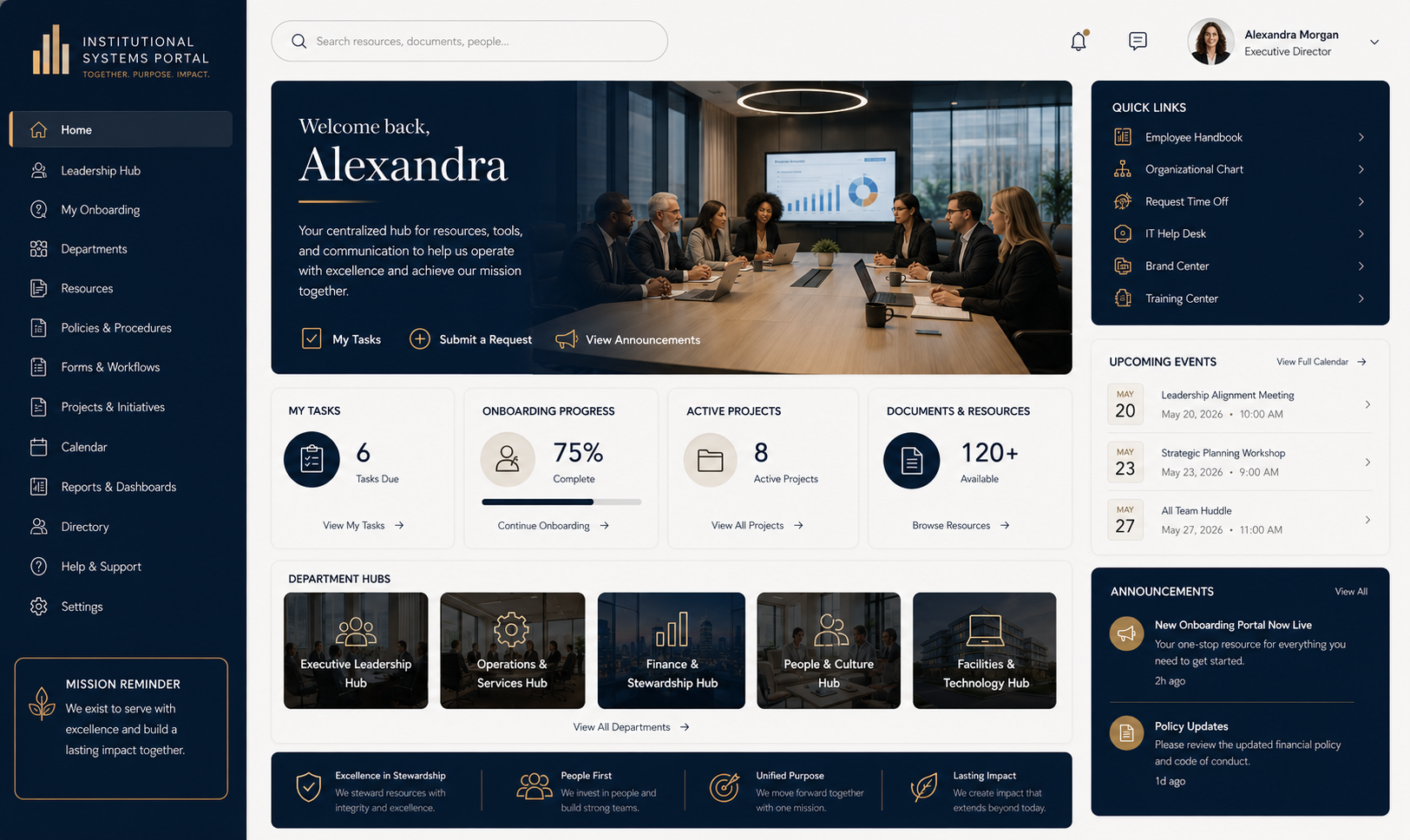
What the Operating System Was Designed to Create
Each phase addressed a different layer of operational maturity, allowing the institution to move from informal execution into a shared, documented, and scalable operating environment.
Role Clarity & Hiring Readiness
Open role review, organizational chart, job description templates, role scorecards, interview support, hiring readiness checklist, and 30/60/90-day role plans.
Consistent New Hire Experience
Welcome resources, mission and values, staff directory, HR forms, IT setup, policy acknowledgments, training resources, and first-90-day expectations.
Internal Hub & Resource Access
Staff homepage, announcements, document library, department pages, request workflows, shared calendars, and leadership visibility tools.
Controls, SOPs & Accountability
Spending approvals, vendor onboarding, contract review, incident reporting, complaint process, access controls, SOP templates, and department playbooks.
The Value Was Not the Software — It Was the Structure
The recommendation included selecting, structuring, securing, documenting, training, and supporting adoption of the technology stack needed to centralize communication, documents, permissions, workflows, onboarding, and leadership visibility.
Workspace & Storage
Microsoft 365, Teams, SharePoint, Google Workspace, cloud storage, permission structure, and document hierarchy.
Requests & Project Tracking
Forms, e-signature, request workflows, project management systems, approval routes, and department dashboards.
HR, Hiring & Access
HRIS, payroll, applicant tracking, password management, onboarding checklists, role-based permissions, and offboarding controls.
Build the Foundation Before Adding More Weight
The recommended path was to begin with a focused Foundation Sprint, then move into leadership readiness, onboarding infrastructure, internal operations, governance controls, and phased implementation support.
Foundation Sprint
Confirm priorities, collect available information, identify missing materials, and define the phased implementation roadmap.
Leadership + Onboarding
Prepare new leaders and staff with clear role expectations, checklists, onboarding resources, and first-90-day support.
Operations Hub + Governance
Centralize workflows, resources, accountability, controls, dashboards, and adoption support into one operating environment.
Institutional Systems, Governance & Operating Infrastructure
This case study demonstrates the ability to diagnose operational gaps, structure phased infrastructure, design internal systems, prepare leadership roles, and create scalable governance architecture.
Operational Diagnostics
Assessing current-state risk, role gaps, workflow breakdowns, and infrastructure needs.
Systems Architecture
Designing hubs, workflows, document structures, onboarding portals, and shared operating environments.
Governance Design
Creating controls, approval matrices, SOPs, accountability tools, and decision boundaries.
Implementation Strategy
Phasing buildouts, supporting adoption, training users, and aligning technology with operations.
Building Infrastructure for the Next Stage of Growth
HIH Advisory supports organizations that need clearer systems, stronger governance, better onboarding, centralized operations, and scalable infrastructure before growth creates avoidable risk.
Initiate Strategic Inquiry